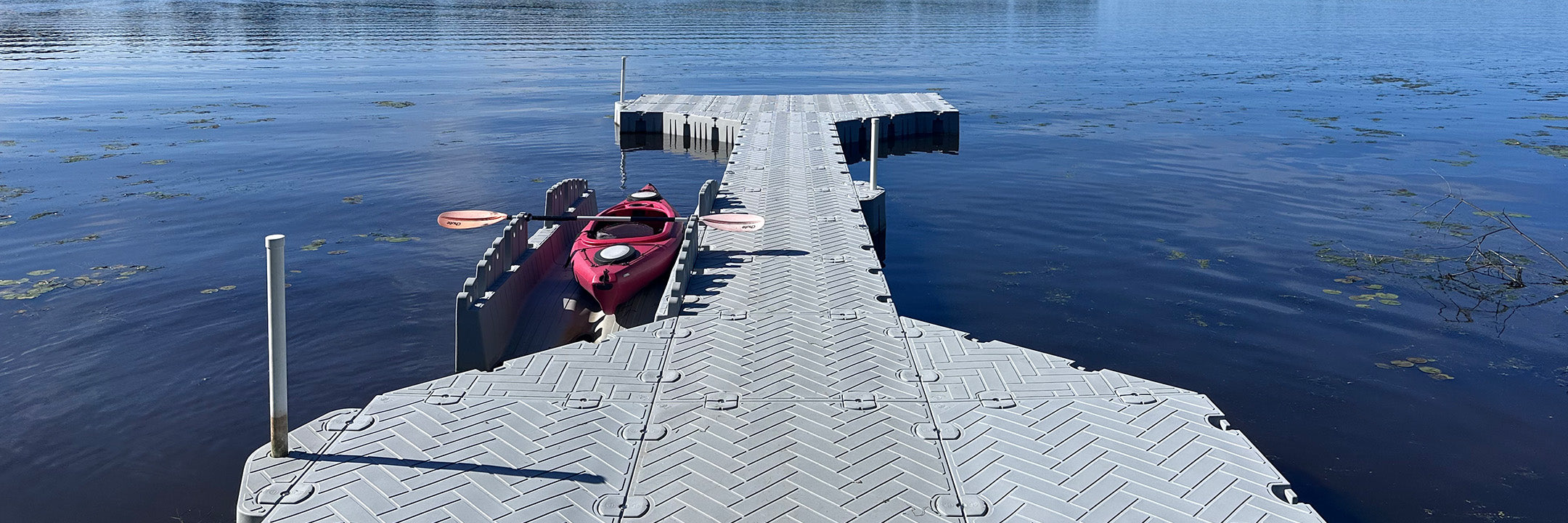
Floating dock pricing varies greatly depending on the size, materials, and design. Generally, you can expect to pay anywhere from $2,600 to $21,000, with the average cost depending on the dock type you choose and how complex the setup is.
A simple floating dock is the most straightforward DIY dock setup to install. It doesn’t require setting posts, piling concrete blocks, or underwater preparation.
Best of all, floating docks are easy to customize and relocate as needed. If a piece of the dock is damaged, you can simply replace the affected dock floats, saving you time and money.
But how much does it cost to make a floating dock? Here are some factors you’ll need to consider to budget appropriately.
What Is A Floating Dock?
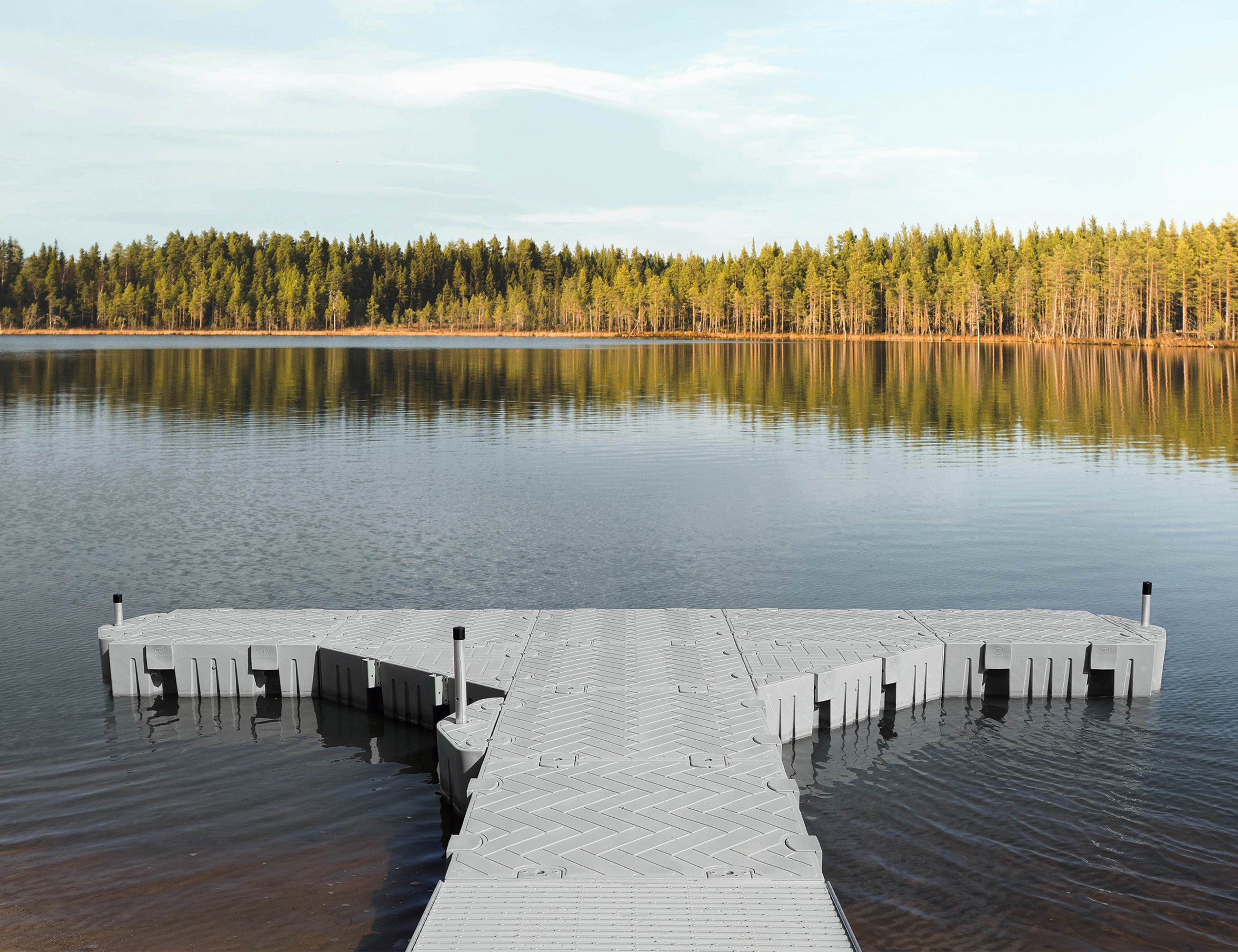
A floating dock sits on top of the water using built-in floats. This allows it to adapt to water fluctuations. Instead of being locked in at one height like a stationary dock, it’s held in place with anchors, cables, or guide poles so it doesn’t drift away, but it can still move with waves and rising or falling water levels.
Because floating docks don’t rely on posts set into the lakebed, they work well across a wide range of water depth, including areas where depths change seasonally or the bottom is uneven. They also don't rely on the lake bottom to stay supported. Since the flotation does the heavy lifting, the dock can work well in spots with soft, uneven, or deep water where dock construction would be harder (or a lot more expensive). That’s why floating docks are popular on lakes, rivers, and tidal areas—if the waterline changes a lot, you don’t end up with a dock that’s suddenly too high or too low.
Floating Dock Cost

Many factors affect a floating dock’s final price tag, including materials, size, and overall design. Local water conditions and weather conditions also play a role—docks in rougher water or a high traffic area with frequent boat wakes often require heavier-duty materials, more flotation, and stronger anchoring, which can increase total cost.
Dock Materials
Your material choice is one of the biggest drivers of floating dock cost. It affects the price of the decking itself and the number of floats you’ll need to keep the dock stable—heavier builds typically require more flotation, which adds to the total cost.
Here’s a simple way to compare common options:
-
Price (lowest to highest): Wood → Aluminum → Polypropylene (Titan)
-
Weight (lightest to heaviest): Polypropylene (Titan) → Aluminum → Wood
-
Durability (least to most): Wood → Aluminum → Polypropylene (Titan)
Our Titan material decks, or polypropylene, will give you the longest-lasting dock. If it’s in your budget, stick with polypropylene as it is lighter and more durable. Otherwise, wood, composite decking, or aluminum frames will be better if you have a tighter budget.
Other materials you will need include:
-
Dock floats
-
Dock frame floats
-
Bumper floats
-
Hardware for assembly
-
Ladders (optional)
-
Roofing materials (optional)
Dock Size
Now that you know what materials you want to build with, you need to know your dock size so you can purchase the right amount of materials.
Dock size is often influenced by how you plan to use it. A small platform may be enough for swimming or a single personal watercraft, while docking a boat or multiple watercraft usually requires more square footage for safe access and maneuvering.
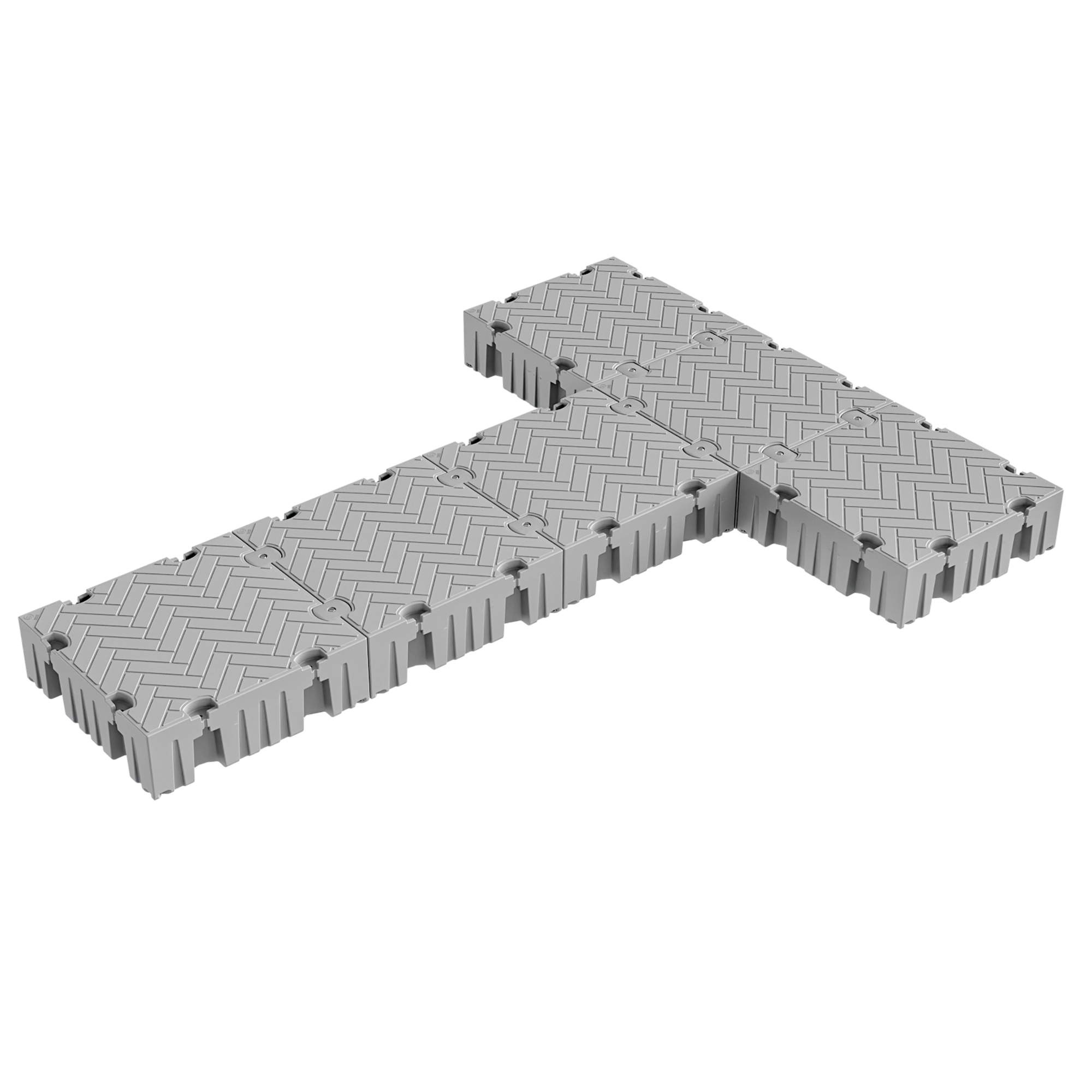
You'll first have to identify how much room you have for a dock, and then what shape you'd like your doc to be. Options include a single platform, or a U-shaped or T-shaped dock.
To measure the size, you'll multiply the length times the width to get the square footage. If you have a U-shaped, or T-shaped docks, measure each dock section separately, then add up the totals. For example, both a dock that is 6 feet wide and 20 feet long would be 120 square feet, while a T-shaped dock made up of three sections totaling 200 square feet would require the same amount of materials.
Overall Design
The more complex your dock design, the more money it will cost because it will have larger square footage.
Additionally, the more corners you have, the more hardware and dock bumpers you will need for the perimeter.
When you include features like a roof or a lit pathway, the price continues to go up.
Installation Costs
Installation costs for a floating dock can vary widely depending on whether you choose DIY or professional installation. Many modular designs are made for DIY assembly, which can help reduce upfront costs, but you’ll still need to factor in equipment, anchoring hardware, and time.
Professional installation typically comes at an additional charge, but it often includes site assessment, proper anchoring, and secure connections to shore. In more complex setups, a rigid connection to the shoreline or pilings may be required, which can increase labor and material costs.
How Much Does a Floating Dock Cost?

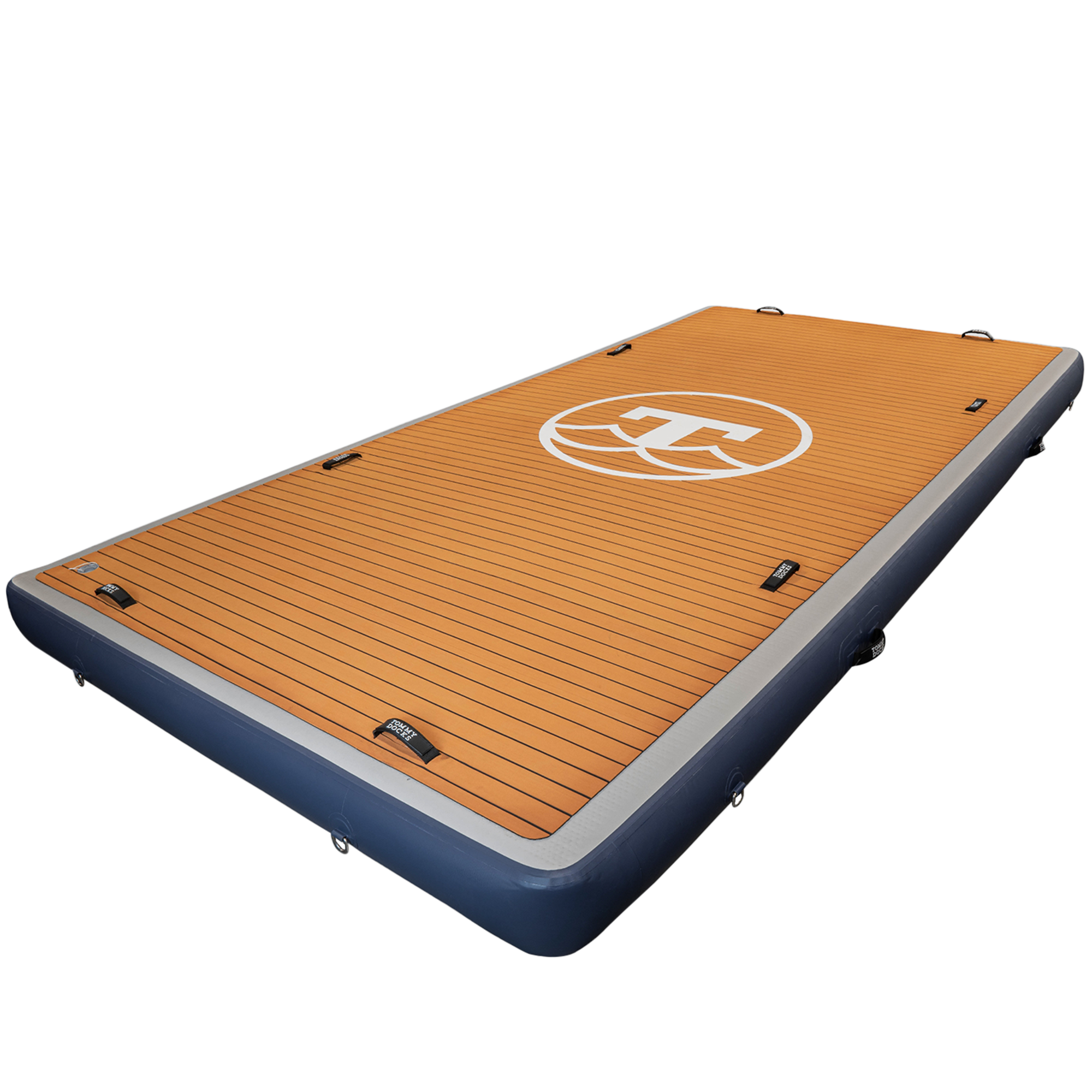
The price of building your own floating dock system is entirely dependent on the materials and design of your dock. The good news is that you can build the perfect dock for your waterfront property with any size budget. Get a basic floating platform dock, or add features like a jet ski dock and ladders.
So what are you waiting for? Get everything you need from Tommy Docks to design your own floating dock!