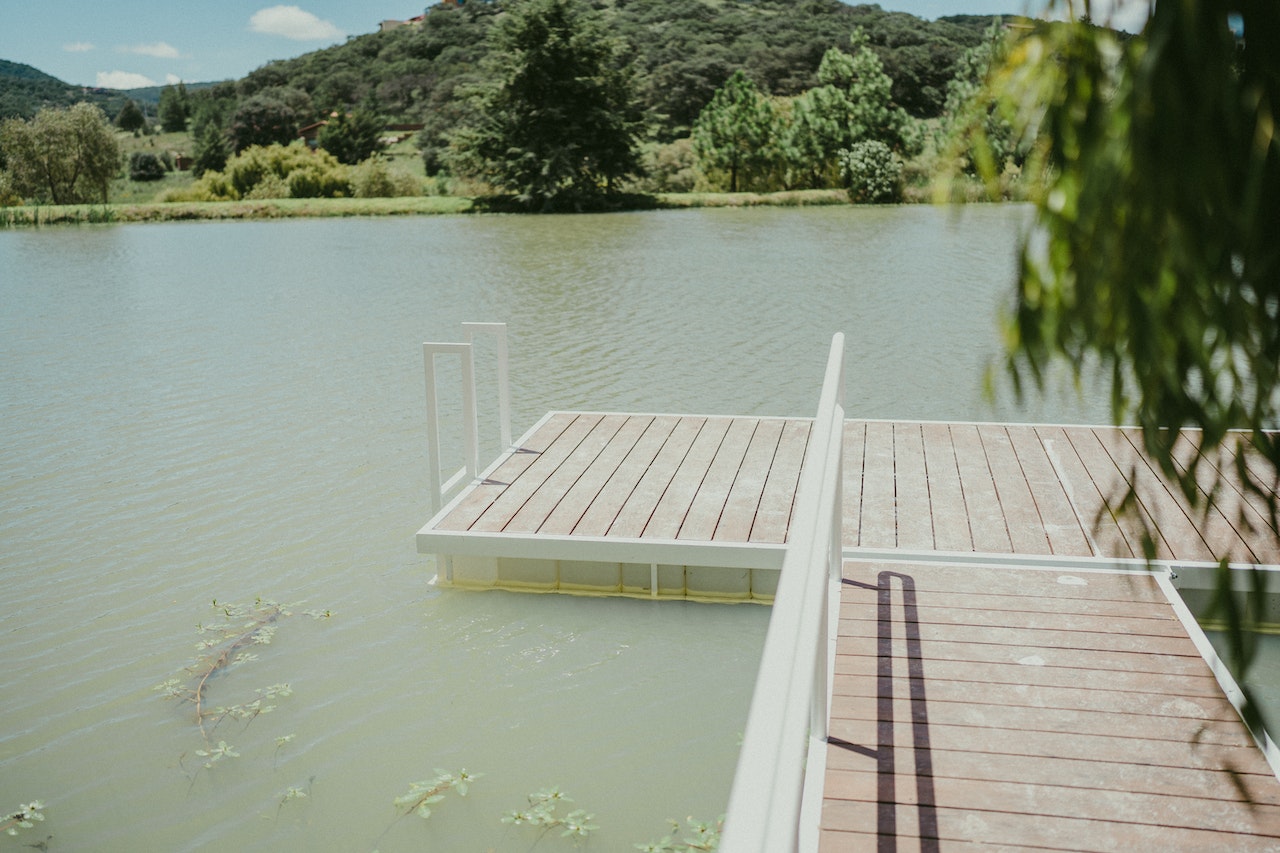
Just as most of us love the natural tones of hardwood floors inside our homes, there’s an undoubted appeal to real wood for decked areas. The idea of installing “fake wood” can be a little off-putting. But with the advanced types of “fake wood” now available, could it be time to reevaluate how we feel about that?
Composite decking is made from a blend of wood fibers and recycled plastics, but, composite decking, AKA fake wood, is not one thing. There are different types available, and some compare more favorably with wood than others. Composite decking gives homeowners and DIYers more cost-effective options for docks and decks that are outside of traditional wood.
With so many options available, knowing how composite decking compares to real wood can help you choose the best material for your outdoor space. This article will explain the main types of composite decking, including their features, pros, and cons.
Let’s take a look at these options and whether you should choose composite wood for your next decking project.
Composite Decking Types
|
Type |
Description |
Key Features & Benefits |
|
Wood-Plastic Composite (WPC) |
A mix of wood fibers and plastic, providing superior durability to natural wood. |
Durable, natural look, resists rot and splintering |
|
Capped Polymer (PVC) |
Constructed entirely of synthetic material, providing the highest moisture resistance. |
100% synthetic, highly moisture-resistant, low maintenance |
|
Mineral-Based Composite (MBC) |
Contains minerals and polymers, offering superior strength, exceptional moisture resistance, and high thermal stability. |
Strongest, most stable, excellent for harsh environments |
Composite Decking
Composite decking is categorized into three main material types: Wood-Plastic Composite (WPC), Capped Polymer (PVC), and Mineral-Based Composite (MBC) decking. These materials are engineered to be a straight swap for traditional wood decking boards, offering a range of durability, appearance, and maintenance benefits. The boards feature a core made from a mixture of recycled wood fibers and plastics, pure synthetic material, or mineral-based composites, which influences their durability and warranty options. If you get the right type, you can use them to construct freshwater docks. According to theconstructor.org, there are three main types:
-
Solid composite decking
-
Hollow composite decking
-
Capped composite decking
Composite decking also offers a wide array of colors and textures, allowing homeowners to choose which aligns with their design vision.
Below, we’ll define each main type of composite decking and their subtypes to help you make the best choice for your project.
Wood-Plastic Composite (WPC)
Wood-Plastic Composite (WPC) is a mix of wood fibers and plastic, providing superior durability to natural wood. WPC boards are designed to mimic the look and feel of real wood while offering increased resistance to rot, splintering, and insect damage. This makes them a popular choice for those who want the appearance of wood with less maintenance.
Solid Composite Decking
This type of fake wood is a solid, heavy-duty product. It is made from a mixture of plastic and wood products or plastic and mineral fillers. At Tommy Docks, we only offer engineered composite decking made without foam or wood fillers. It's a truly robust product that is fully waterproof - perfect for your new home dock.
Hollow Composite Decking
This lightweight form of fake wood is suitable for low-impact applications. Hollow composite decking is lighter and often cheaper than solid options, making it a good choice for those on a budget. It is not suitable for docks or decks but can be used for siding or cladding.
Capped Composite Decking
Capped composite decking has a synthetic coating that is textured and colored to look like wood. Internally, there is a mixture of polypropylene and wood material. Capped decking features a protective polymer shell that guards against fading, staining, and scratching. It contains a core incorporating recycled materials, including wood and plastic, and is encased with either a 3- or 4-sided synthetic and protective cap. This makes it more protective than hollow composite, but it doesn’t have the strength of solid composite decking.
Capped Polymer Decking
Capped polymer decking is constructed entirely of synthetic material, providing the highest moisture resistance. This type of composite decking features a PVC core and a plastic cap on three or four sides. Unlike capped composite decking, capped polymer decking does not contain any organic material, making it impervious to pests and moisture. It is highly durable and typically offers much longer warranties, with some products covered for up to 50 years.
Mineral-Based Composite (MBC) Decking
Mineral-Based Composite (MBC) decking offers superior strength, exceptional moisture resistance, and high thermal stability. MBC boards are made from a blend of minerals and polymers, resulting in a product that is extremely strong, stable, and ideal for harsh environments or heavy-use applications.
Now that we've explored the main types of composite decking, let's see how they compare to traditional wood options.
Composite vs. Wood Decking
When choosing between composite and wood decking, it’s important to consider several key factors. Below, we break down the main points of comparison to help you make an informed decision.
Composite Decking Performance Highlights
Composite decking, especially solid composite types, stands out in several performance areas. For example, Tommy Docks' composite decking outshines the leading brand in terms of:
-
Strength-to-weight ratio
-
Maximum deflection at midspan
-
Thermal movement
Unlike wood decking, composite decking is impervious to damage from the elements and pests, providing superior durability and weather resistance.
Tommy Dock’s composite decking also comes with a 25-year removal and replacement warranty that includes ground and water contact. There is no better choice of composite decking out there - but how does it compare with traditional wood decking materials?
|
Feature / Type |
Wood- |
Capped Polymer (PVC) |
Mineral- Based Composite (MBC) |
Solid Composite Decking |
Hollow Composite Decking |
Capped Composite Decking |
|
Material Composition |
Blend of wood fibers and plastic |
100% synthetic material (PVC core and plastic cap) |
Blend of minerals and polymers |
Mixture of plastic and wood or mineral fillers |
Hollow channels with composite materials |
Wood and plastic core with protective polymer shell |
|
Durability |
Durable, resists rot and splintering |
Highly durable, highest moisture resistance |
Extremely strong and stable, ideal for harsh environments |
Heavy-duty, fully waterproof, robust |
Lightweight, less durable, suitable for low-impact applications |
Protective cap guards against fading, staining, and scratching |
|
Maintenance |
Low maintenance, occasional cleaning |
Virtually maintenance-free |
Low maintenance |
Minimal maintenance |
Requires more care, less durable |
Low maintenance, resists staining and fading |
|
Appearance |
Natural wood look with texture |
Wide range of colors and finishes, synthetic look |
Varied textures, strong and stable appearance |
Resembles traditional wood |
May have less natural appearance |
Wood-like texture with protective coating |
|
Moisture Resistance |
Good moisture resistance |
Highest moisture resistance |
Exceptional moisture resistance |
Fully waterproof |
Lower moisture resistance |
Good moisture resistance |
|
Weight |
Moderate |
Moderate to heavy |
Heavy |
Heavy |
Lightweight |
Moderate |
|
Cost |
Mid-range |
Higher initial cost |
Premium cost |
Varies, generally higher than hollow composite |
Cost-effective, budget-friendly |
Mid to high cost |
|
Environmental Impact |
Made from recycled wood fibers and plastics |
Fully synthetic, recyclable in some cases |
Contains minerals, eco-friendly materials |
Blend of recycled materials |
Uses less material, eco-friendly |
Incorporates recycled materials |
|
Warranty |
Typically 25 years or more |
Up to 50 years |
Long warranties, premium products |
Varies by manufacturer |
Shorter warranties |
Typically long warranties |
|
Best Use Cases |
General decking, balance of durability and cost |
Areas with high moisture exposure, low maintenance desired |
Harsh environments, heavy-use applications |
High-traffic decks, docks requiring strength |
Budget projects, siding, cladding |
Residential decks needing durability and aesthetics |
With these key differences in mind, you can better evaluate which decking material aligns with your project goals and lifestyle.
Now that you have a clear comparison, let’s look at other important considerations when choosing your decking material.
Decking Material Considerations
Durability and Longevity
Unlike traditional wood decking, which can require frequent sealing, staining, and repairs, composite decking is designed for durability and minimal maintenance. The blend of composite materials means these boards are resistant to rot, splintering, and weathering, making them ideal for homeowners who want a beautiful deck without the hassle of constant upkeep.
Design and Style Options
Another advantage of composite decking is the range of styles and finishes available. Whether you’re looking to match the natural beauty of wood or prefer a more modern look, composite deck boards come in a variety of colors and textures to suit any design vision. Plus, the use of recycled plastics in their construction makes them an environmentally friendly choice, reducing waste and supporting sustainability.
Making the Right Choice
When choosing your decking material, consider factors such as cost, durability, required maintenance, and the overall look you want to achieve. Composite decking offers a blend of performance and affordability that makes it a smart investment for many projects, providing long-lasting beauty and value for your outdoor space.
With these considerations in mind, you’re ready to make a confident decision for your next decking project.
The Verdict: Composite vs. Wood Decking Options
Both wood and composite decking options have pros and cons. If you love the natural look and are happy to put in the maintenance, cedar docks are a great option.
But if you prefer a more low-maintenance solution with a longer lifespan, composite decking from Tommy Docks is the way to go. Backed by a 25-year warranty, Tommy Docks' composite decking ensures your dock will look great and perform well for decades.
Explore Tommy Docks' premium composite decking options and discover the perfect solution for your next project. Visit our stationary dock collection today to find durable, beautiful decking that fits your needs and budget!